
Detect Autism and Language Delay with Early Screening

Detect Autism and Language Delay with Early Screening

Improve your screening capabilities with the first automatic, objective language and autism screen


The not-for-profit LENA Foundation now offers the LENA Language and Autism Screen (LLAS), a three-part assessment for children ages 24-48 months. The LLAS enables speech-language professionals to:

  • Automatically and objectively screen for autism. After analyzing a child's vocalizations, we provide a score and probability for the likelihood of autism.
  • Detect language delays. We measure a child's expressive and receptive language skills—based on answers to a 52-item parent questionnaire—and provide you with a language development age and determine if a language delay may be present.
  • Assess the quality of a child's language environment. We measure the number of adult words spoken to and near a child; determine the number of conversational interactions a child has with adults; and rate the quality of a child's audio environment.

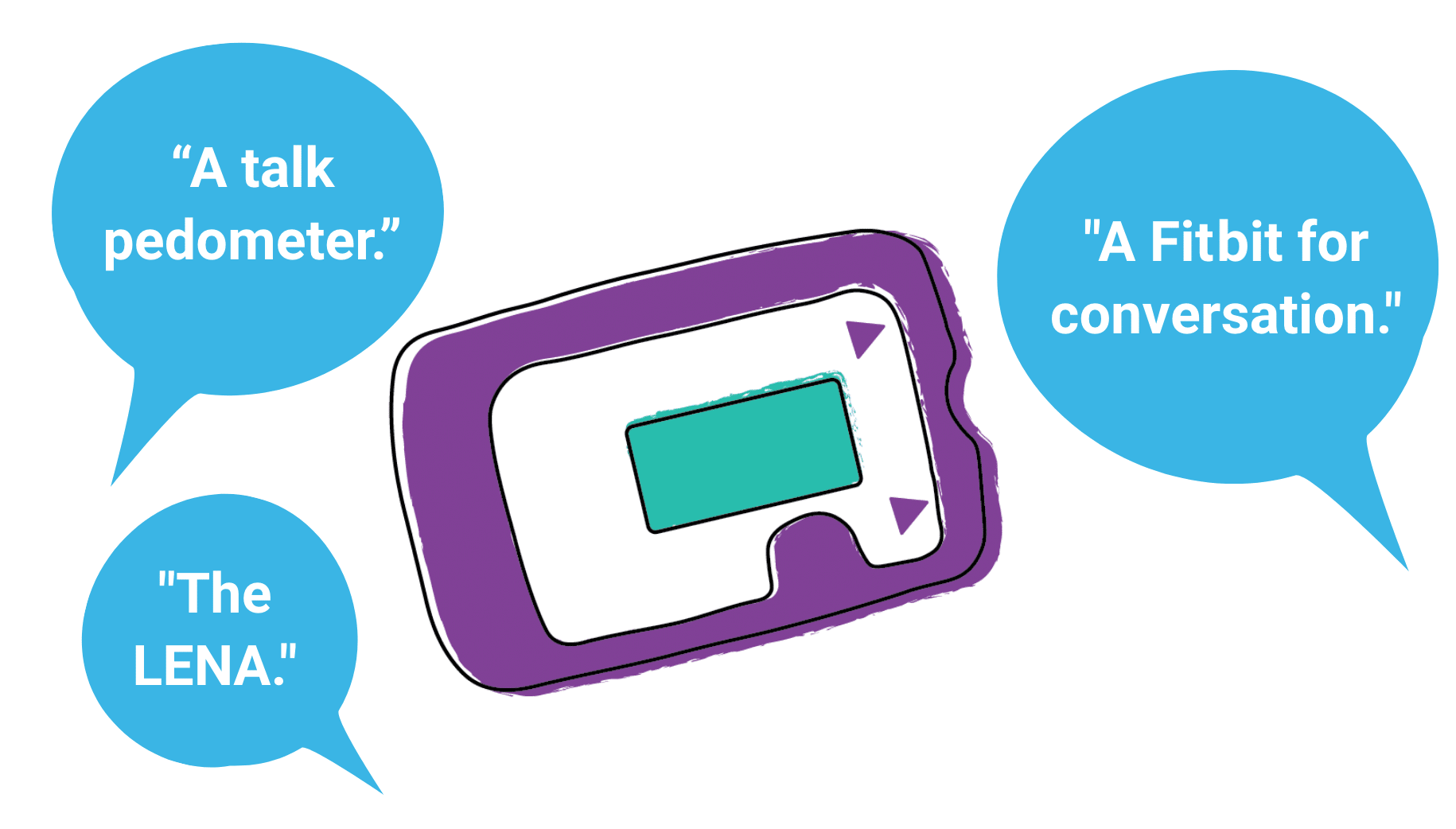
It's easy to Order the LLAS. After you provide the requested order and payment information through our online shop, we send the child's parents a kit with a LENA Digital Language Processor (DLP—a small, unobtrusive recording device), LENA Clothing, and some questionnaires. On the recording day (we recommend a weekend day), the parents dress the child in the LENA Clothing, turn on and insert the DLP in the clothing pocket and record 12 to 16 hours of the child’s daily vocalizations. The next day, the parents send the DLP and other materials back to us in a prepaid FedEx envelope. We process the data and send you the results and reports within two weeks of receiving the packet.

Order Now. Or for more information on the LLAS, please call 1.866.503.9918.


Experts on Early Intervention:

  • An estimated 1 in 110 children in the United States have autism, according to the Center for Disease Control and Prevention (CDC)
  • Average age of autism diagnosis is 5.7 years, according to a recent study by Washington University in St. Louis

"Research indicates that intervention provided before age 3-4 years has a greater impact than that after age 5. Younger children consistently make more progress during intervention than do older children."

- Teresa Cardon, M.A., CCC-SLP, autism specialist and author of Let's Talk Emotions and Initiations and Interactions

"Based on a set of individualized, specialized objectives and plans that are systematically implemented, educational services should begin as soon as a child is suspected of having an autistic spectrum disorder."

"Children with autistic spectrum disorders, like children with vision or hearing problems, require early identification and diagnosis to equip them with the skills (e.g., imitation, communication) to benefit from educational services, with some evidence that earlier initiation of specific services for autistic spectrum disorders is associated with greater response to treatment."

- Committee on Educational Interventions for Children with Autism, from the book Educating Children with Autism